
Did you know that a contaminated air conditioning (A/C) unit can present various health hazards and impact indoor air quality?
Here are several possible health hazards linked to a contaminated A/C system:
- Allergens and Triggers
- Dust Mites and Pollen: The build-up of dust, pollen, and various particles can provoke allergies or asthma in susceptible people.
- Mold Formation: Humidity in A/C systems can result in mold and mildew growth, releasing spores into the atmosphere and leading to breathing problems
- Pathogens in the Air
- Bacteria and Viruses: A contaminated A/C system can contain dangerous bacteria and viruses, which may be distributed around the house, elevating the chances of illnesses
- Issues with Breathing
- Irritation: Particles like dust, dirt, and pollutants can provoke the respiratory system, leading to symptoms such as coughing, sneezing, and throat discomfort
- Aggravating Asthma: People suffering from asthma might experience intensified symptoms because of allergens and irritants present in the atmosphere.
- Distasteful Smells
- Stale Air Quality: Buildup of dirt and mold can cause musty smells, potentially harming indoor air quality and comfort.
General Health Impacts:
Tiredness and Migraines: Low air quality can cause overall unease, tiredness, and even migraines from the accumulation of pollutants in the atmosphere.
Increased Energy Costs: A filthy system might exert more effort to cool the area, resulting in higher energy usage and expenses.
Preventative Actions:
- Routine Maintenance: Frequently clean or swap out A/C filters, coils, and ducts to maintain adequate airflow and minimize contaminants
- Humidity Management: Keep humidity levels in check to reduce mold development
- Planned Maintenance: Ensure a professional examines the system yearly to guarantee it functions effectively and cleanly
- Maintaining your A/C system clean and in good condition can greatly lower health hazards and improve indoor air quality.
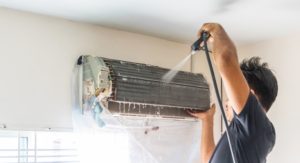
Maintaining the efficiency and extending the lifespan of an air conditioning (A/C) unit requires regular cleaning. Here’s a detailed guide on how we clean A/C units
Cleaning a Window Air Conditioning Unit. Materials Required:
- Screwdriver
- Clean with a gentle brush nozzle
- Gentle soap
- Gentle fabric or pad
- H2O
- Commercial air conditioning cleaner
Steps:
- Shut Down Electricity
- Turn off the electricity to the A/C unit at the circuit breaker
- Wash or Substitute the Air Filter
- Inspect the air filter in the furnace or air handler. Service or exchange it as required based on the manufacturer’s guidelines
- Clean the condenser unit
- Clear away any clutter surrounding the external condenser unit (such as leaves, dirt, etc.)
- Utilize a gentle brush or vacuum cleaner to remove dust from the coils
- Apply a coil cleaner if necessary and rinse with a garden hose (avoid using a pressure washer)
- Remove Debris from the Drain Line
- Inspect the condensate drain line for blockages. A wet/dry vacuum can be utilized to remove any blockages
- Examine Ducts and Vents
- Make certain that ducts and vents are free of blockages and dirt. Clean and vacuum them as needed
- Evaluate the System
- After all is cleaned, restore the power and check the system to verify it’s operating effectively